
Dr. Dominik Waßenhoven
Research Areas
- History of the Early and High Middle Ages
- Northern European History (Early Medieval England; Scandinavia)
- Historiography and perceptions of history
- Political and church history of the Ottonian period
- Comparative history
- Mobility and cultural transmission
Bishops and royal successions
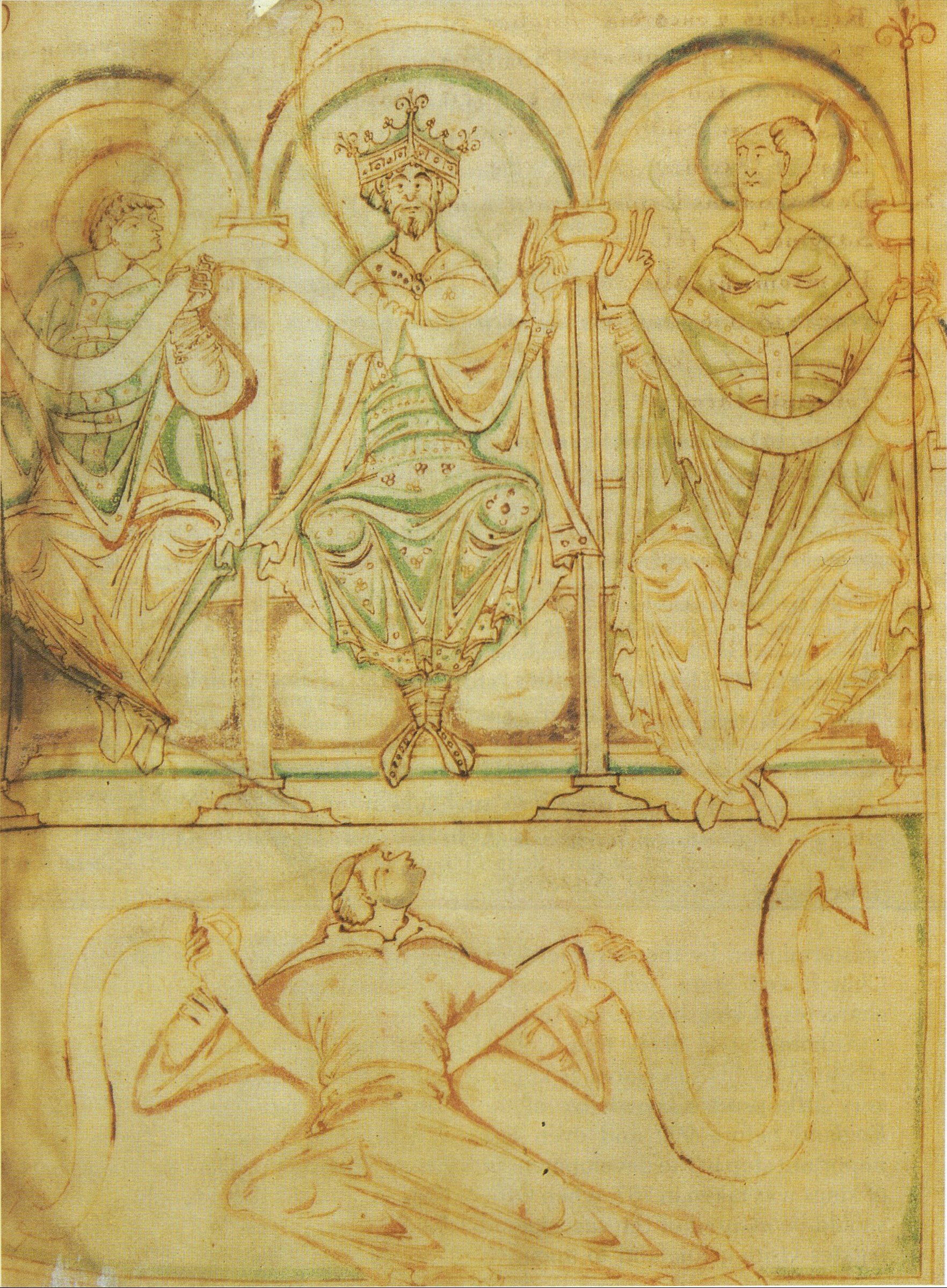
In my current research project I am looking at the perception and depiction of bishops between 950 and 1050, roughly, with a special focus on their role in royal successions. My aim is to overcome the classic view on bishops from the kings’ perspective and as their agents, which has been prevalent especially for the Ottonian-Salian kingdom. I will thereby concentrate on the bishops’ actions, or, to be more precise, on the description of these actions in contemporary sources. Therefore narrative sources are at the heart of the project, above all historiography and hagiography (saints’ lives), but also sermons and legal sources. The aim of the project is to determine perceptions and conceptions of bishops and thereby their position in the society of the tenth and eleventh centuries, both in Germany and England.
Mind the Gap / Mut zur Lücke
Überlieferungsinseln in Schwarzrheindorf – Kontinuitäten, Brüche und ihre Narrative in verschiedenen Disziplinen


Wie wird die Geschichte eines konkreten Ortes in verschiedenen wissenschaftlichen Fächern erzählt? Welcher Stellenwert wird materiellen und immateriellen Zeugnissen und ihren Kontexten zugeschrieben? Und wie gehen die jeweiligen Fachdisziplinen mit ‚Überlieferungslücken‘ um – mit kurzen sowie langen Zeiten ohne Quellen? Diesen Leitfragen widmet sich das Projekt „Mind the Gap / Mut zur Lücke. Überlieferungsinseln in Schwarzrheindorf“ anhand eines Fallbeispiels – dem Ort Bonn-Schwarzrheindorf mit dem benachbarten Frauenkonvent Vilich. Ausgehend von der Perspektive der longue durée fokussiert das Vorhaben auf einen sowohl inter- als auch transdisziplinären Austausch unterschiedlicher geisteswissenschaftlicher Fächer.
Konkret untersucht das Verbundforschungsprojekt in einem ersten Strang den Umgang mit Überlieferungslücken in den Fächern Kunstgeschichte, Vor- und Frühgeschichtliche Archäologie und Geschichtswissenschaft und vergleicht die in diesen drei Disziplinen vorherrschenden Narrative rund um quellenarme Zeiten, insbesondere der Spätantike und des Mittelalters, in einem interdisziplinären Zugriff. In einem zweiten Strang prüft das Projekt in transdisziplinärer Perspektive inwiefern sich bestehende Überlieferungslücken mit modernen, auch naturwissenschaftlichen Analysemethoden schließen lassen. Auf diese Weise begegnet das Projekt sowohl wissenschaftstheoretischen als auch gegenstandsbezogenen Forschungsdesideraten der einzelnen Disziplinen.
Einerseits bestehen in Schwarzrheindorf und Vilich markante Überlieferungsbefunde – andererseits scheinen diese wie Inseln von quellenlosen Zeiten umgeben zu sein. Dies betrifft beispielsweise das bereits im 20. Jh. ausgegrabene merowingerzeitliche Gräberfeld in Schwarzrheindorf, die im 10. Jahrhundert erfolgte Vilicher Stiftsgründung, die Doppelkapelle aus der Mitte des 12. Jahrhunderts sowie den seit 1361 bestehenden Jüdischen Friedhof. Die Rezeptionsgeschichte dieser ‚Inseln‘ reicht bis in unsere Gegenwart. Am Beispiel dieser Orte setzt die diachrone Betrachtung an, die fachspezifische Kontexte der Entwicklung, Tradierung und Dekonstruktion von Narrativen (Rezeptionsgeschichte) analysiert. Besonderes Augenmerk liegt dabei auf der Übernahme von Fakten sowie Hypothesen aus den jeweiligen Nachbardisziplinen, die zur Füllung bestehender Wissenslücken eingesetzt werden. Wie unterscheiden sich die einzelnen Disziplinen im Umgang mit fach- beziehungsweise quellenspezifischen Überlieferungslücken und wie kann die gemeinsame Geschichtsschreibung konstruktiv sowie angemessen kritisch gestaltet werden?
In den letzten Jahren sind Meistererzählungen in den historischen Wissenschaften vermehrt in den Fokus und zu Recht in die Kritik geraten. Derartige meist auf die Makroebene bezogene Überlegungen finden allerdings häufig keine Übertragung auf die Mikroebene der Lokalforschung. Etablierte Narrative werden gegen den individuellen lokalen Forschungsstand geprüft und aktualisiert.
Für das Frühjahr 2026 ist eine von Studierenden der drei Fachrichtungen gestaltete Ausstellung geplant, die einen reflektierten Umgang mit Geschichtsschreibung und Geschichtswahrnehmung thematisiert und einer interessierten Öffentlichkeit kommunizieren wird. Die Ausstellung und die initiale Projektphase werden durch den Transdisziplinären Forschungsbereich 5 „Present Pasts: Vergangene Welten – Zeitgenössische Fragen. Kulturen in Zeit und Raum“ der Universität Bonn im Rahmen der Exzellenzstrategie von Bund und Ländern gefördert.
Das Projekt führe ich gemeinsam mit Dr. Hanna Christine Jacobs (Kunstgeschichte, Bonn) und Dr. des. Valerie Palmowski (Vor- und Frühgeschichtliche Archäologie, Bonn) durch.
Die deutschen Königspfalzen – Nordrhein
For the volume on the North-Rhine area in the publication series ‘Die deutschen Königspfalzen’ I work on the articles about Schwarzrheindorf and Vilich. You can find more information on this project here (in German only).